Details for A904783
False






Report
Report Current Image
- report the current image for inappropriate content
Your link has been copied!
Animal information
A904783
Placement Info:
This animal may not be available for placement. Please contact the shelter directly to learn more.
This animal may not be available for placement. Please contact the shelter directly to learn more.
Located At: Pima Animal Care Center - Tucson
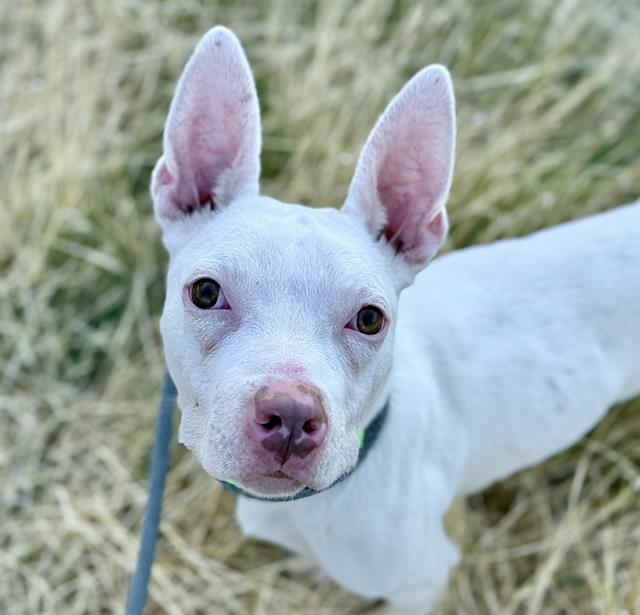
Description: My name is Pip*.
I am a spayed female, white Pit Bull Terrier.
I am a spayed female, white Pit Bull Terrier.
Weight: I weigh approximately 35.00 lbs.
Age: The shelter staff think I am about 1 year and 2 months old.
More Info: I have been at the shelter since Sep 22, 2026.
I am in Kennel D103.
If you are interested in adopting this pet, visit us during regular business hours. Please email pacc.adopt@pima.gov for any questions regarding the adoption process.
If you believe this is your lost pet, come down during regular business hours to reclaim or email pacclostandfound@pima.gov with any questions.
I am in Kennel D103.
If you are interested in adopting this pet, visit us during regular business hours. Please email pacc.adopt@pima.gov for any questions regarding the adoption process.
If you believe this is your lost pet, come down during regular business hours to reclaim or email pacclostandfound@pima.gov with any questions.
Bio: EMERGENCY PLACEMENT DEADLINE
CLOSE OF BUSINESS SUNDAY 10/11/26
AVAILABLE FOR ADOPTION ONLY THROUGH PACC
Name: Pip
Animal ID: A904783
Age: 1 year 2 months
Weight: 35lbs
Web Link: 24petconnect.com/AdoptPACC/Details/PIMA/A904783
About: Meet Pip, a one-year-and-two-month-old white Pitbull with a uniquely striking look and a charming, compact size. She is a deaf, active girl who absolutely adores people and craves affection. When it comes to other dogs, Pip shines in playgroup and enthusiastically initiates playtime, making her a fun-loving companion for socialization.
Because she is deaf and can easily get overstimulated, Pip is looking for an experienced handler who is willing to put in the time to guide her behavior and help focus her attention. When she gets overly excited, she can become jumpy and mouthy. Pip does have a minor bite on her record that occurred when her previous owner attempted to untangle a wrapped leash while she was aroused, resulting in bites to both hands.
For these reasons, Pip needs a peaceful home without children where her new family can provide careful management, consistent structure, and the patience she needs to thrive safely.
Available for adoption only through PACC.
Interested parties:
Must visit PACC before the COB Sunday October 11th, 2026 deadline to meet with a counselor who will review notes and introduce you to the dog to ensure that it’s a good fit. Some dogs may also require an introduction to any dogs they may potentially live with.
Home Management Plan
1) Bite History:
• Incident Details: Minor bite - Pip was tangled in leashes, victim went to untangle dog and was bit twice on both hands
2)High Drive Behavior:
• Pip displays high-drive behaviors such as overstimulation, mouthy, jumpy behavior
• Energy Management: High-drive dogs require constant mental and physical enrichment to prevent frustration and unwanted behaviors.
• Enrichment Ideas: Provide structured outlets such as training sessions, puzzle feeders, scent games, agility, or other interactive activities that challenge both mind and body.
• Handler Expectations: These dogs thrive with clear structure, consistency, and purpose. Without appropriate outlets, they may develop destructive or attention-seeking behaviors.
3)Children Caution: NO CHILDREN UNDER 15 YEARS OLD
• Supervision Required: Children should never be left alone with any dog. Always monitor interactions closely to ensure safety for both the child and Pip.
• Appropriate Interaction: Roughhousing, grabbing, hugging, or sudden movements can cause stress or fear, potentially leading to defensive behaviors. Teach children to interact calmly and respectfully.
• Safe Space: Provide them with a designated area (such as a crate or quiet room) where they can retreat when they need space. Crate training is highly recommended.
• Leash Management: Keep a dragline attached for at least two weeks, or until they are fully comfortable around children. This allows safe, low-stress handling if intervention is needed.
4)Resource Guards Attention From People:
• Pip may guard attention or affection from certain people, particularly those they are bonded to.
• Muzzle Training: Muzzle training is strongly recommended for all new introductions to ensure safety and reduce stress for both Pip and others.
• Professional Support: Establish clear boundaries early and seek guidance from a qualified trainer to help manage and modify guarding behavior.
• Management at Home: Create a calm, designated space where they can relax when guests arrive or when attention is divided. Avoid scolding or punishing guarding behaviors - focus on redirection and rewarding calm, appropriate responses.
• Recognize Warning Signals: Watch for signs that they are becoming uncomfortable, such as stiffening, growling, or placing themselves between people. These behaviors should be respected by giving space and calmly redirecting their focus.
5)Needs Training:
• Pip would benefit from training support to address jumpy, mouthy, SCI
• Positive Reinforcement: Focus on reward-based training methods to encourage desired behaviors and build confidence.
• Professional Guidance: Reach out to TOP Dogs at topdogshelp@gmail.com or consult an outside trainer for additional support and coaching.
6)Deaf:
• Training & Consistency: Deaf dogs thrive on routine, consistency, and clear visual communication. It is HIGHLY recommended to contact Gail Smith with TOP Dogs at foster070204@gmail.com (please allow 24 hours for a response) for FREE training support.
• Harness Requirement: If they are wearing a harness, it should go home with them to ensure continuity and safety during walks.
• Support Program: TOP Dogs is a volunteer project supported by Friends of PACC and provides FREE resources and training assistance.
7) People Selective: NO CHILDREN UNDER 15 YEARS OLD
• Pip prefers to choose their own human friends and may not be comfortable with everyone. Always allow them to approach new people on their own terms.
• Introductions: Keep initial introductions calm, controlled, and brief. Encourage visitors to avoid direct eye contact or reaching towards them until trust is built.
• Muzzle Training: Conditioning Pip to comfortably wear a muzzle is recommended for new introductions to ensure safety and reduce stress.
• Visitor Management: Keep them securely separated when unfamiliar people are present, especially if they show signs of discomfort or stress. Gradual exposure and positive reinforcement are key to success.
• Recognize Warning Signals: The adopter/foster must be attentive to [INSERT NAME]’s body language, which can indicate stress or potential for escalation. Early warning signs include:
• Lip lifting or showing teeth.
• Low growling or vocal tension.
• Avoidance, stiff posture, or freezing.
• These warnings should be respected immediately by creating distance and giving them space to recover.
8) On Prozac:
• Pip is currently taking Prozac [Fluoxetine] for behavioral support.
• Do NOT stop or change this medication without consulting your personal veterinarian.
• MUST be tapered: Stopping abruptly may cause negative physical or behavioral side effects.
CLOSE OF BUSINESS SUNDAY 10/11/26
AVAILABLE FOR ADOPTION ONLY THROUGH PACC
Name: Pip
Animal ID: A904783
Age: 1 year 2 months
Weight: 35lbs
Web Link: 24petconnect.com/AdoptPACC/Details/PIMA/A904783
About: Meet Pip, a one-year-and-two-month-old white Pitbull with a uniquely striking look and a charming, compact size. She is a deaf, active girl who absolutely adores people and craves affection. When it comes to other dogs, Pip shines in playgroup and enthusiastically initiates playtime, making her a fun-loving companion for socialization.
Because she is deaf and can easily get overstimulated, Pip is looking for an experienced handler who is willing to put in the time to guide her behavior and help focus her attention. When she gets overly excited, she can become jumpy and mouthy. Pip does have a minor bite on her record that occurred when her previous owner attempted to untangle a wrapped leash while she was aroused, resulting in bites to both hands.
For these reasons, Pip needs a peaceful home without children where her new family can provide careful management, consistent structure, and the patience she needs to thrive safely.
Available for adoption only through PACC.
Interested parties:
Must visit PACC before the COB Sunday October 11th, 2026 deadline to meet with a counselor who will review notes and introduce you to the dog to ensure that it’s a good fit. Some dogs may also require an introduction to any dogs they may potentially live with.
Home Management Plan
1) Bite History:
• Incident Details: Minor bite - Pip was tangled in leashes, victim went to untangle dog and was bit twice on both hands
2)High Drive Behavior:
• Pip displays high-drive behaviors such as overstimulation, mouthy, jumpy behavior
• Energy Management: High-drive dogs require constant mental and physical enrichment to prevent frustration and unwanted behaviors.
• Enrichment Ideas: Provide structured outlets such as training sessions, puzzle feeders, scent games, agility, or other interactive activities that challenge both mind and body.
• Handler Expectations: These dogs thrive with clear structure, consistency, and purpose. Without appropriate outlets, they may develop destructive or attention-seeking behaviors.
3)Children Caution: NO CHILDREN UNDER 15 YEARS OLD
• Supervision Required: Children should never be left alone with any dog. Always monitor interactions closely to ensure safety for both the child and Pip.
• Appropriate Interaction: Roughhousing, grabbing, hugging, or sudden movements can cause stress or fear, potentially leading to defensive behaviors. Teach children to interact calmly and respectfully.
• Safe Space: Provide them with a designated area (such as a crate or quiet room) where they can retreat when they need space. Crate training is highly recommended.
• Leash Management: Keep a dragline attached for at least two weeks, or until they are fully comfortable around children. This allows safe, low-stress handling if intervention is needed.
4)Resource Guards Attention From People:
• Pip may guard attention or affection from certain people, particularly those they are bonded to.
• Muzzle Training: Muzzle training is strongly recommended for all new introductions to ensure safety and reduce stress for both Pip and others.
• Professional Support: Establish clear boundaries early and seek guidance from a qualified trainer to help manage and modify guarding behavior.
• Management at Home: Create a calm, designated space where they can relax when guests arrive or when attention is divided. Avoid scolding or punishing guarding behaviors - focus on redirection and rewarding calm, appropriate responses.
• Recognize Warning Signals: Watch for signs that they are becoming uncomfortable, such as stiffening, growling, or placing themselves between people. These behaviors should be respected by giving space and calmly redirecting their focus.
5)Needs Training:
• Pip would benefit from training support to address jumpy, mouthy, SCI
• Positive Reinforcement: Focus on reward-based training methods to encourage desired behaviors and build confidence.
• Professional Guidance: Reach out to TOP Dogs at topdogshelp@gmail.com or consult an outside trainer for additional support and coaching.
6)Deaf:
• Training & Consistency: Deaf dogs thrive on routine, consistency, and clear visual communication. It is HIGHLY recommended to contact Gail Smith with TOP Dogs at foster070204@gmail.com (please allow 24 hours for a response) for FREE training support.
• Harness Requirement: If they are wearing a harness, it should go home with them to ensure continuity and safety during walks.
• Support Program: TOP Dogs is a volunteer project supported by Friends of PACC and provides FREE resources and training assistance.
7) People Selective: NO CHILDREN UNDER 15 YEARS OLD
• Pip prefers to choose their own human friends and may not be comfortable with everyone. Always allow them to approach new people on their own terms.
• Introductions: Keep initial introductions calm, controlled, and brief. Encourage visitors to avoid direct eye contact or reaching towards them until trust is built.
• Muzzle Training: Conditioning Pip to comfortably wear a muzzle is recommended for new introductions to ensure safety and reduce stress.
• Visitor Management: Keep them securely separated when unfamiliar people are present, especially if they show signs of discomfort or stress. Gradual exposure and positive reinforcement are key to success.
• Recognize Warning Signals: The adopter/foster must be attentive to [INSERT NAME]’s body language, which can indicate stress or potential for escalation. Early warning signs include:
• Lip lifting or showing teeth.
• Low growling or vocal tension.
• Avoidance, stiff posture, or freezing.
• These warnings should be respected immediately by creating distance and giving them space to recover.
8) On Prozac:
• Pip is currently taking Prozac [Fluoxetine] for behavioral support.
• Do NOT stop or change this medication without consulting your personal veterinarian.
• MUST be tapered: Stopping abruptly may cause negative physical or behavioral side effects.
Data Updated: This information was refreshed 21 minutes ago.
Shelter information
Location: Pima Animal Care Center - Tucson
Address: 4000 North Silverbell Road
Tucson, AZ 85745
Tucson, AZ 85745